



How does the customized protection of EPS fillers mitigate the risk of collision damage during transportation?
Release Time : 2026-08-11
The safe transportation of complex home appliances relies heavily on advanced packaging engineering, with customized Expanded Polystyrene (EPS) fillers serving as the primary defense against collision damage. Unlike generic packaging solutions, customized EPS protection mitigates the risk of transit damage through a highly engineered combination of precise geometric immobilization, targeted structural reinforcement, and superior energy absorption.
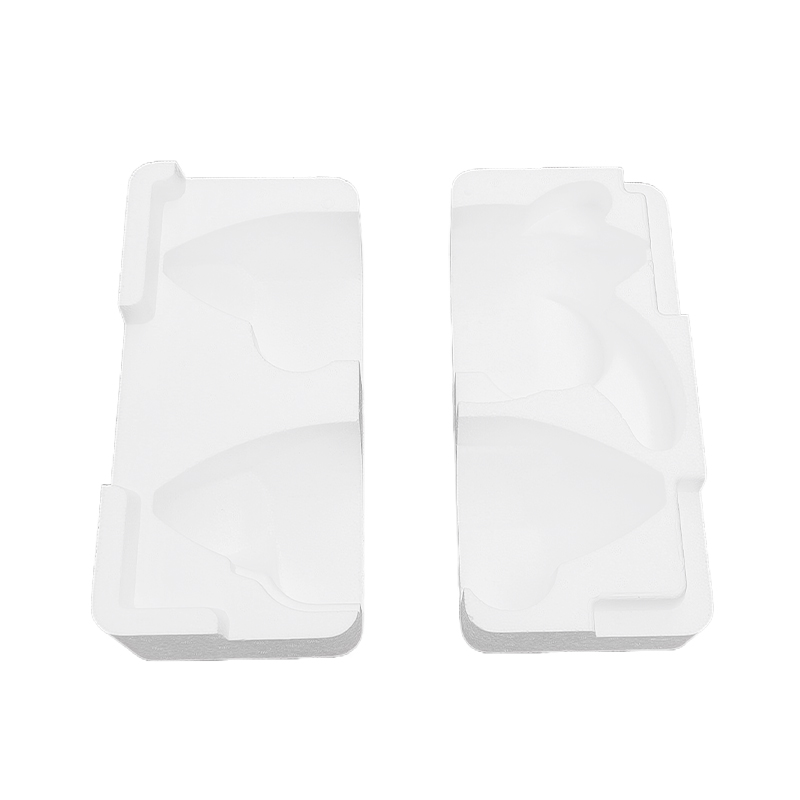
The most critical mechanism by which customized EPS prevents collision damage is absolute immobilization. Appliances possess unique dimensions and varying centers of gravity, making them susceptible to shifting during the constant vibrations and sudden impacts of logistics. Customized EPS fillers are molded with exact grooves, protrusions, and wrap-around structures that perfectly mirror the contours of the specific appliance. By creating a bespoke negative space, the EPS filler locks the product in place, effectively restricting its degrees of freedom. This tight fit ensures that the appliance moves as a single, unified entity with the outer packaging, completely eliminating internal movement and preventing the product from colliding with the box walls or with itself.
Furthermore, this customized approach allows for the precise targeting of vulnerable areas. Home appliances are not uniformly fragile; they contain highly sensitive components such as glass screens, precision control panels, and heavy internal compressors. Standard padding distributes protection evenly, which can be inefficient and inadequate for localized weak points. Custom EPS engineering addresses this by strategically varying the thickness and density of the foam. For instance, thicker, high-density EPS blocks are specifically positioned around glass panels and delicate circuitry to create localized shock-absorbing zones. Conversely, structural protrusions are designed to support heavy components like compressors, preventing them from dislodging or sustaining internal mechanical damage during sudden drops.
The material properties of EPS also play a vital role in mitigating collision damage. The foam is composed of a porous structure containing millions of microscopic, closed-cell air pockets. When an external collision occurs, the kinetic energy is transferred to the EPS filler. Instead of passing through to the appliance, this energy causes the air pockets to compress and collapse. This mechanical deformation effectively converts and dissipates the destructive impact energy, significantly reducing the peak force transmitted to the appliance. This cushioning effect is particularly crucial for protecting precision internal circuitry, which can suffer from microscopic solder joint fractures even when external casing remains undamaged.
Additionally, customized EPS fillers manage the distribution of stacking and compressive forces. During transit, packages are frequently stacked, creating immense downward pressure. Custom EPS structures are designed with reinforced columns and ribs that align with the strongest structural points of the appliance. These features act as load-bearing pillars, transferring the weight of the stacked packages directly to the outer carton rather than allowing it to crush the fragile components of the appliance.
Ultimately, the customized protection of EPS fillers transforms packaging from a simple container into an active safety system. By combining exact geometric immobilization, targeted reinforcement of vulnerable components, and advanced energy-dissipating material properties, customized EPS ensures that home appliances can withstand the rigorous demands of modern supply chains, arriving at their destination in pristine, fully functional condition.
The most critical mechanism by which customized EPS prevents collision damage is absolute immobilization. Appliances possess unique dimensions and varying centers of gravity, making them susceptible to shifting during the constant vibrations and sudden impacts of logistics. Customized EPS fillers are molded with exact grooves, protrusions, and wrap-around structures that perfectly mirror the contours of the specific appliance. By creating a bespoke negative space, the EPS filler locks the product in place, effectively restricting its degrees of freedom. This tight fit ensures that the appliance moves as a single, unified entity with the outer packaging, completely eliminating internal movement and preventing the product from colliding with the box walls or with itself.
Furthermore, this customized approach allows for the precise targeting of vulnerable areas. Home appliances are not uniformly fragile; they contain highly sensitive components such as glass screens, precision control panels, and heavy internal compressors. Standard padding distributes protection evenly, which can be inefficient and inadequate for localized weak points. Custom EPS engineering addresses this by strategically varying the thickness and density of the foam. For instance, thicker, high-density EPS blocks are specifically positioned around glass panels and delicate circuitry to create localized shock-absorbing zones. Conversely, structural protrusions are designed to support heavy components like compressors, preventing them from dislodging or sustaining internal mechanical damage during sudden drops.
The material properties of EPS also play a vital role in mitigating collision damage. The foam is composed of a porous structure containing millions of microscopic, closed-cell air pockets. When an external collision occurs, the kinetic energy is transferred to the EPS filler. Instead of passing through to the appliance, this energy causes the air pockets to compress and collapse. This mechanical deformation effectively converts and dissipates the destructive impact energy, significantly reducing the peak force transmitted to the appliance. This cushioning effect is particularly crucial for protecting precision internal circuitry, which can suffer from microscopic solder joint fractures even when external casing remains undamaged.
Additionally, customized EPS fillers manage the distribution of stacking and compressive forces. During transit, packages are frequently stacked, creating immense downward pressure. Custom EPS structures are designed with reinforced columns and ribs that align with the strongest structural points of the appliance. These features act as load-bearing pillars, transferring the weight of the stacked packages directly to the outer carton rather than allowing it to crush the fragile components of the appliance.
Ultimately, the customized protection of EPS fillers transforms packaging from a simple container into an active safety system. By combining exact geometric immobilization, targeted reinforcement of vulnerable components, and advanced energy-dissipating material properties, customized EPS ensures that home appliances can withstand the rigorous demands of modern supply chains, arriving at their destination in pristine, fully functional condition.