



How can motor EPS packaging be moisture-proofed to cope with the challenges of different transportation environments?
Release Time : 2026-03-10
As core equipment in modern industry, the moisture protection of electric motors during transportation directly affects product performance and lifespan. EPS (expanded polystyrene) packaging has become the mainstream choice for motor transportation packaging due to its lightweight, excellent cushioning performance, and cost-effectiveness. However, humidity, temperature fluctuations, and mechanical shocks in different transportation environments pose stringent challenges to the moisture-proof performance of EPS packaging. To ensure that motors are protected from moisture corrosion in complex logistics chains, a multi-dimensional moisture-proof system needs to be constructed, encompassing material selection, structural design, sealing processes, and environmental adaptability optimization.
The inherent moisture-proof performance of EPS material is fundamental to its application. As a closed-cell foam plastic, EPS has a dense molecular chain structure that effectively blocks water vapor penetration. However, ordinary EPS material may still undergo dimensional changes due to moisture absorption under long-term high humidity environments, thus affecting the cushioning performance of the packaging. Therefore, high-density or modified EPS raw materials must be selected, and moisture absorption rates can be reduced and structural stability improved by increasing material density or adding moisture-proofing agents. Furthermore, a moisture-proof coating can be applied to the EPS surface to form a physical barrier, further blocking moisture. This composite structure maintains the lightweight advantage of EPS while significantly enhancing its moisture-proof capabilities.
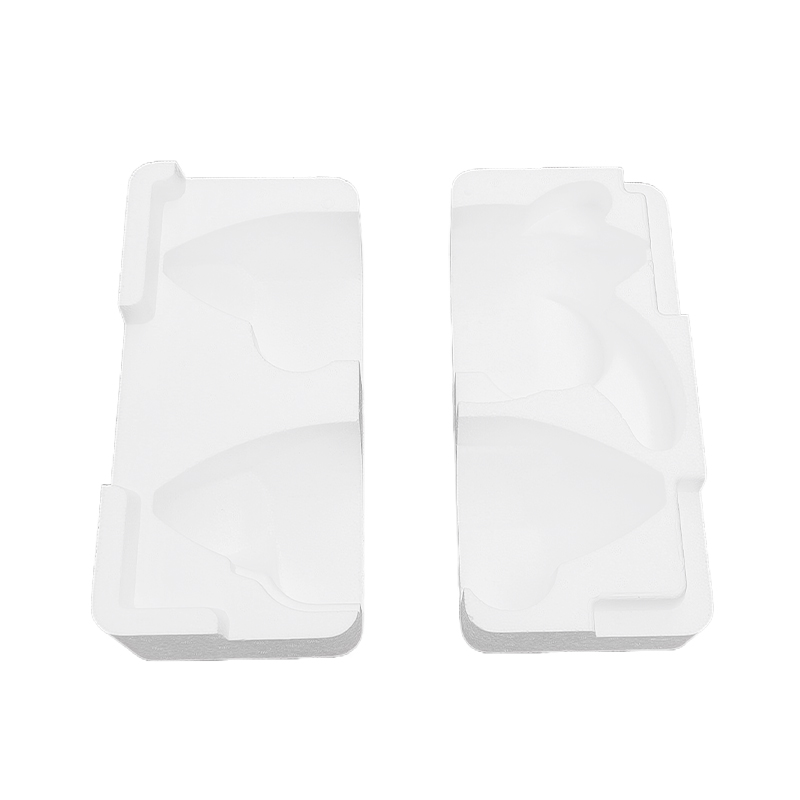
Packaging structure design is the core of the moisture-proof system. Motor EPS packaging needs to be customized according to the product shape, weight, and transportation environment to ensure a tight fit between the packaging and the motor surface, reducing the path for moisture intrusion. For example, for irregularly shaped motors, a modular design can be used to disassemble the packaging into multiple parts, which can be combined using snaps or adhesives, facilitating production and improving sealing. Simultaneously, a moisture-proof cavity can be set inside the packaging, filled with desiccant or using vapor phase corrosion inhibitor paper, to actively absorb residual moisture and inhibit corrosion of metal parts. In addition, the packaging edges need to be reinforced or thickened to enhance impact resistance and prevent seal failure due to drops or compression.
Sealing technology is a key guarantee of moisture-proof performance. The sealing performance of motor EPS packaging directly affects its moisture-proof effect, requiring seamless connections achieved through technologies such as heat fusion, tape sealing, or ultrasonic welding. Thermal fusion sealing utilizes high temperatures to melt and re-solidify the EPS surface, forming a strong sealing layer suitable for large-area sealing. Tape sealing requires high-strength, aging-resistant, moisture-proof tape to ensure it doesn't peel off under temperature changes. Ultrasonic welding uses high-frequency vibration to generate frictional heat between material molecules, achieving localized fusion and offering strong sealing and high efficiency. Regardless of the process used, double protection is necessary at the sealing point, such as adding an inner lining or using a moisture-proof film to eliminate potential leakage risks.
Optimizing for transport environment adaptability is a necessary supplement to the moisture-proof system. Significant temperature and humidity differences exist between regions, requiring adjustments to packaging solutions based on the climate characteristics of the target market. For example, in humid coastal areas or during rainy seasons, a moisture-proof cover can be added to the outer layer of the EPS packaging, using aluminum foil composite film or high-barrier plastic film to reduce the risk of moisture intrusion by isolating it from external air. In hot, dry areas, attention must be paid to the aging resistance of the packaging materials to prevent embrittlement due to ultraviolet radiation. In addition, for long-distance sea freight or cold chain transportation, temperature and humidity monitoring devices must be installed inside the packaging to monitor environmental changes in real time and take corresponding measures.
The scientific use of desiccants is an auxiliary means of the moisture-proof system. Although EPS packaging and sealing processes can block most moisture, trace amounts of water vapor may still exist inside the packaging. By properly placing desiccants inside the packaging, residual moisture can be actively absorbed, maintaining a dry internal environment. Commonly used desiccants include silica gel, calcium chloride, and molecular sieves, and the appropriate type and dosage should be selected based on the packaging volume, transportation duration, and ambient humidity. For example, silica gel desiccants have strong hygroscopicity and can be reused, making them suitable for short-term transportation; calcium chloride desiccants have a large hygroscopic capacity and are suitable for high-humidity environments; molecular sieves have selective adsorption capabilities for specific gases, meeting special moisture-proof requirements.
Packaging testing and verification are the quality assurance of the moisture-proof system. Before mass production, the Motors EPS packaging must undergo rigorous moisture-proof performance testing, including simulated transportation vibration, drop, high temperature and humidity, and salt spray tests, to evaluate the packaging's performance in actual logistics. Accelerated aging tests can predict the moisture-proof performance of packaging during long-term use, allowing for timely identification and improvement of design flaws. Furthermore, establishing standard operating procedures for moisture-proof packaging ensures standardized management of material selection, process parameters, and quality inspection during production, guaranteeing that every batch of packaging meets moisture-proof requirements.
Moisture-proofing motors EPS packaging is a systematic project requiring coordinated optimization across materials, design, processes, environmental adaptability, and testing. By selecting high-performance EPS materials, customized structural design, precision sealing processes, environmental adaptability adjustments, and the scientific use of desiccants, a comprehensive moisture barrier can be constructed, effectively addressing the challenges of various transportation environments. This not only provides reliable protection for motors, extending their service life, but also enhances the company's brand image and strengthens market competitiveness. With the rapid development of the logistics industry and increasingly stringent environmental requirements, motors EPS packaging's moisture-proof technology will continue to innovate, providing superior solutions for the safe transportation of industrial equipment.