



How can EPS fillers achieve precise, customized protection for different appliance components through structural design?
Release Time : 2026-03-31
In modern appliance transportation and packaging systems, EPS fillers have become a crucial component for protecting product safety. Due to the complex structure and diverse components of household appliances, such as displays, compressors, and control panels, which vary significantly in strength and fragility, traditional single-form cushioning materials are insufficient to meet the demands of refined protection. Therefore, achieving precise customization of EPS fillers through structural design, enabling them to provide differentiated protection for different components, has become a key direction for improving packaging performance.
1. Differentiated Protection Through Zoning Design
Based on the characteristics of different appliance components, EPS fillers typically employ a zoning structural design, dividing the overall packaging into multiple functional areas. For example, for the fragile display area, a flexible support structure is designed to disperse external forces through large-area contact; while for the heavier compressor, high-density support blocks are used to enhance load-bearing capacity. Through this zoning design, different parts can receive support and cushioning matched to their stress characteristics, thus avoiding the problems of insufficient protection or material waste caused by a "uniform design."
2. Enhanced Fit and Positioning with Concave-Concave Structures
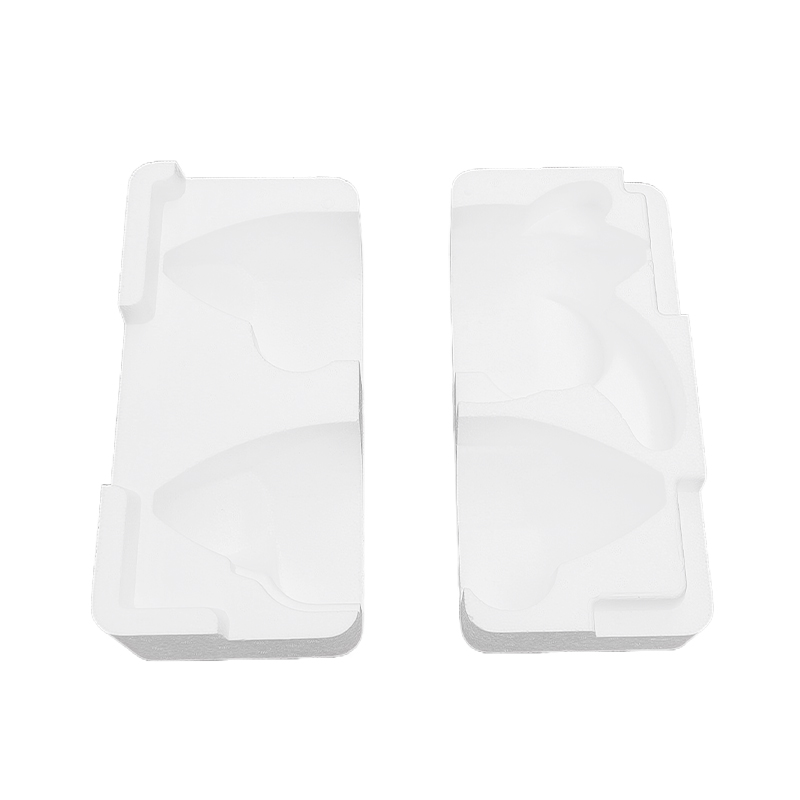
EPS fillers can be molded to create complex grooves, protrusions, and wraparound structures, allowing for a high degree of conformity to the appliance's shape. Grooves precisely accommodate critical components, limiting their displacement during transport; protrusions provide localized support, preventing suspension or uneven stress. Furthermore, wraparound structures can envelop the product from multiple directions, creating a stable and secure fit. This high-fit design not only enhances protection but also reduces secondary impacts caused by shaking.
3. Optimized Cushioning Performance with Multi-Density Design
In EPS filler design, adjusting the material density in different areas allows for more precise cushioning control. Low-density areas have better energy absorption capabilities, suitable for absorbing impact forces and protecting delicate components; while high-density areas provide structural support, preventing overall collapse or deformation. Through this multi-density combination design, EPS fillers can achieve graded energy absorption during impacts, gradually attenuating the impact force and minimizing the impact on the appliance's internal structure.
4. Enhanced Safety Through Reinforced Design of Critical Components
For particularly vulnerable or high-value components, such as glass panels and control circuit areas, EPS fillers typically feature reinforced designs. This includes increasing cushioning thickness, optimizing support angles, or introducing a floating structure to prevent these components from directly bearing external forces upon impact. Additionally, reinforced corners effectively mitigate common drop impacts during transportation, improving overall impact resistance.
5. Modular and Universal Design Enhances Adaptability
With the diversification of home appliance models, EPS fillers are increasingly moving towards modularity. By designing combinable standard modules, they can adapt to products of different sizes and structures within a certain range, reducing customization costs. Meanwhile, customized designs are retained in critical contact areas, achieving a balance between versatility and specialization. This design approach not only improves production efficiency but also enhances the flexibility of packaging solutions.
In summary, through zoned design, raised and recessed structures, multi-density optimization, and reinforcement of critical components, EPS fillers can achieve precise and customized protection for different home appliance components. This structured design not only enhances product safety during transportation but also promotes the development of packaging towards efficiency, sophistication, and sustainability.
1. Differentiated Protection Through Zoning Design
Based on the characteristics of different appliance components, EPS fillers typically employ a zoning structural design, dividing the overall packaging into multiple functional areas. For example, for the fragile display area, a flexible support structure is designed to disperse external forces through large-area contact; while for the heavier compressor, high-density support blocks are used to enhance load-bearing capacity. Through this zoning design, different parts can receive support and cushioning matched to their stress characteristics, thus avoiding the problems of insufficient protection or material waste caused by a "uniform design."
2. Enhanced Fit and Positioning with Concave-Concave Structures
EPS fillers can be molded to create complex grooves, protrusions, and wraparound structures, allowing for a high degree of conformity to the appliance's shape. Grooves precisely accommodate critical components, limiting their displacement during transport; protrusions provide localized support, preventing suspension or uneven stress. Furthermore, wraparound structures can envelop the product from multiple directions, creating a stable and secure fit. This high-fit design not only enhances protection but also reduces secondary impacts caused by shaking.
3. Optimized Cushioning Performance with Multi-Density Design
In EPS filler design, adjusting the material density in different areas allows for more precise cushioning control. Low-density areas have better energy absorption capabilities, suitable for absorbing impact forces and protecting delicate components; while high-density areas provide structural support, preventing overall collapse or deformation. Through this multi-density combination design, EPS fillers can achieve graded energy absorption during impacts, gradually attenuating the impact force and minimizing the impact on the appliance's internal structure.
4. Enhanced Safety Through Reinforced Design of Critical Components
For particularly vulnerable or high-value components, such as glass panels and control circuit areas, EPS fillers typically feature reinforced designs. This includes increasing cushioning thickness, optimizing support angles, or introducing a floating structure to prevent these components from directly bearing external forces upon impact. Additionally, reinforced corners effectively mitigate common drop impacts during transportation, improving overall impact resistance.
5. Modular and Universal Design Enhances Adaptability
With the diversification of home appliance models, EPS fillers are increasingly moving towards modularity. By designing combinable standard modules, they can adapt to products of different sizes and structures within a certain range, reducing customization costs. Meanwhile, customized designs are retained in critical contact areas, achieving a balance between versatility and specialization. This design approach not only improves production efficiency but also enhances the flexibility of packaging solutions.
In summary, through zoned design, raised and recessed structures, multi-density optimization, and reinforcement of critical components, EPS fillers can achieve precise and customized protection for different home appliance components. This structured design not only enhances product safety during transportation but also promotes the development of packaging towards efficiency, sophistication, and sustainability.