



How can motor EPS packaging achieve precise fit with different motor models through customized design?
Release Time : 2026-04-28
Motor EPS packaging is widely used in motor transportation and storage due to its lightweight and excellent cushioning performance. Different motor models vary significantly in size, structure, and center of gravity distribution. If the packaging does not match, displacement or excessive localized stress can easily occur during transportation, leading to damage.
1. Precise Modeling Based on Motor Structure
Customized design first requires detailed measurement and modeling of the motor, including its external dimensions, protruding parts, and center of gravity position. Through 3D modeling technology, the structural characteristics of the motor can be fully understood, providing an accurate data foundation for subsequent EPS packaging design, thereby avoiding loosening or compression problems caused by dimensional errors.
2. Zonal Design Enhances Local Protection
A zonal structural design can be adopted to address the stress characteristics of different parts of the motor. For example, reinforced support structures can be set for critical areas such as bearing ends and flange surfaces, while conventional supports are used for relatively robust areas. This differentiated design allows the EPS packaging to achieve a perfect overall fit while focusing on protecting vulnerable areas, improving targeted protection.
3. Full Coverage Structure for a Perfect Fit
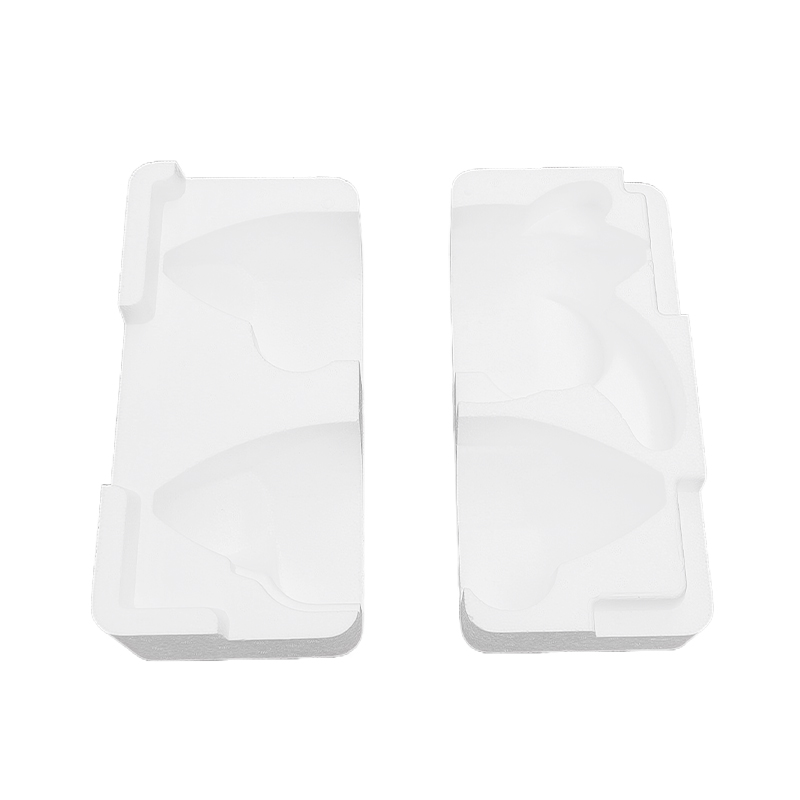
EPS packaging typically employs a top-and-bottom or side-by-side overlapping structure, providing complete protection for the motor after installation. By rationally designing the internal cavity shape to perfectly match the motor's shape, the movement space of the motor within the packaging is effectively limited, thereby reducing collisions and friction during transportation.
4. Optimized Stress Distribution with Reserved Buffer Gaps
In addition to achieving a perfect fit, a reasonable buffer space is also necessary. By reserving a certain amount of compression space in key contact areas, the EPS material can elastically deform upon impact, thus absorbing external energy. This "fitting + buffering" design helps achieve a balance between tightness and protection.
5. Mold Design Ensures Consistency and Precision
EPS packaging is typically formed through mold foaming. Mold precision directly determines product consistency. High-precision mold processing and optimized design ensure that each batch of packaged products has stable dimensions and structure, thus guaranteeing consistent protection for different motors during batch transportation.
6. Consideration for Assembly and Operation Ease
Customized design not only focuses on protective performance but also on practical ease of use. For example, by incorporating positioning slots, handheld positions, or guiding structures, assembly efficiency can be improved and operational difficulty reduced. Simultaneously, a well-designed assembly/disassembly structure also helps enhance the reusability of the packaging.
7. Flexible Design for Multiple Model Adaptation
In practical applications, modular or serialized designs allow a single EPS packaging package to accommodate multiple similar motor models. This flexible design, while ensuring a perfect fit, improves the packaging's versatility and reduces production and inventory costs.
In summary, motors EPS packaging achieves a high degree of fit for different motor models through precise modeling, partitioned structural design, and high-precision mold manufacturing. This customized design not only enhances protection during transportation but also strengthens the packaging's practicality and economy, providing reliable assurance for the safe transport of motor products.
1. Precise Modeling Based on Motor Structure
Customized design first requires detailed measurement and modeling of the motor, including its external dimensions, protruding parts, and center of gravity position. Through 3D modeling technology, the structural characteristics of the motor can be fully understood, providing an accurate data foundation for subsequent EPS packaging design, thereby avoiding loosening or compression problems caused by dimensional errors.
2. Zonal Design Enhances Local Protection
A zonal structural design can be adopted to address the stress characteristics of different parts of the motor. For example, reinforced support structures can be set for critical areas such as bearing ends and flange surfaces, while conventional supports are used for relatively robust areas. This differentiated design allows the EPS packaging to achieve a perfect overall fit while focusing on protecting vulnerable areas, improving targeted protection.
3. Full Coverage Structure for a Perfect Fit
EPS packaging typically employs a top-and-bottom or side-by-side overlapping structure, providing complete protection for the motor after installation. By rationally designing the internal cavity shape to perfectly match the motor's shape, the movement space of the motor within the packaging is effectively limited, thereby reducing collisions and friction during transportation.
4. Optimized Stress Distribution with Reserved Buffer Gaps
In addition to achieving a perfect fit, a reasonable buffer space is also necessary. By reserving a certain amount of compression space in key contact areas, the EPS material can elastically deform upon impact, thus absorbing external energy. This "fitting + buffering" design helps achieve a balance between tightness and protection.
5. Mold Design Ensures Consistency and Precision
EPS packaging is typically formed through mold foaming. Mold precision directly determines product consistency. High-precision mold processing and optimized design ensure that each batch of packaged products has stable dimensions and structure, thus guaranteeing consistent protection for different motors during batch transportation.
6. Consideration for Assembly and Operation Ease
Customized design not only focuses on protective performance but also on practical ease of use. For example, by incorporating positioning slots, handheld positions, or guiding structures, assembly efficiency can be improved and operational difficulty reduced. Simultaneously, a well-designed assembly/disassembly structure also helps enhance the reusability of the packaging.
7. Flexible Design for Multiple Model Adaptation
In practical applications, modular or serialized designs allow a single EPS packaging package to accommodate multiple similar motor models. This flexible design, while ensuring a perfect fit, improves the packaging's versatility and reduces production and inventory costs.
In summary, motors EPS packaging achieves a high degree of fit for different motor models through precise modeling, partitioned structural design, and high-precision mold manufacturing. This customized design not only enhances protection during transportation but also strengthens the packaging's practicality and economy, providing reliable assurance for the safe transport of motor products.