



Why is EPS Filler Considered Essential for Protecting Compressors and Control Panels in Home Appliances?
Release Time : 2026-04-22
The logistics network governing the distribution of modern home appliances is a complex and often brutal environment. From the moment a refrigerator or washing machine leaves the manufacturing plant until it reaches the consumer's home, it is subjected to a gauntlet of vibrations, drops, and compressive forces. At the heart of this logistical challenge lies the protection of the appliance's most critical and vulnerable components: the compressor and the electronic control panel. Expanded Polystyrene (EPS) filler has emerged as the indispensable guardian for these sensitive parts. Its unique combination of physical properties, design versatility, and economic efficiency makes it the material of choice for ensuring that heavy, valuable machinery arrives in perfect working order.
The compressor serves as the engine of many home appliances, particularly in cooling devices like refrigerators and air conditioners. It is a heavy, mechanical assembly containing precise tolerances, delicate valves, and often fragile copper tubing. During transportation, the primary threat to a compressor is shock—specifically the high G-forces generated when a package is dropped or slammed onto a hard surface. EPS filler addresses this threat through its exceptional energy absorption capabilities. The material consists of approximately 98% air trapped within a closed-cell structure. Upon impact, these cells compress and deform, dissipating the kinetic energy of the shock before it can be transmitted to the compressor itself. This cushioning effect effectively lowers the peak acceleration experienced by the component, preventing mechanical deformation or internal breakage.
Beyond simple shock absorption, the weight of the compressor presents a structural challenge. Because compressors are dense and heavy, they can exert immense pressure on the outer packaging or the appliance casing during stacking. EPS filler is engineered to provide high compressive strength. It acts as a rigid cradle, bearing the load of the heavy component and distributing it evenly across the packaging structure. This prevents the compressor from crushing the cardboard box or damaging the thin metal sheets of the appliance body. By creating a rigid internal framework, the EPS filler ensures that the heavy mechanical parts remain suspended in a state of equilibrium, isolated from the external forces acting on the package.
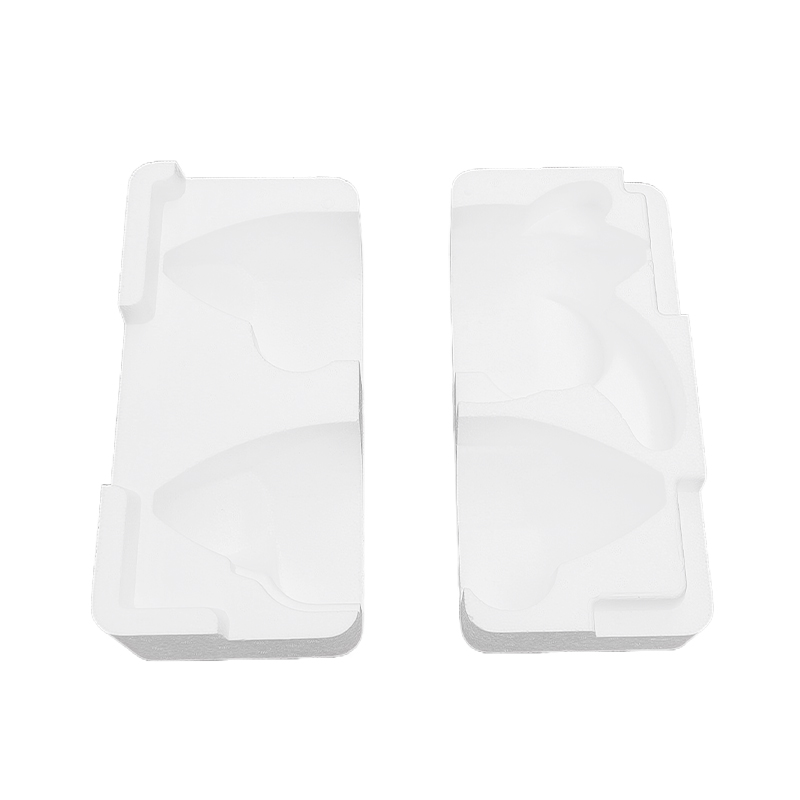
Equally critical is the protection of the appliance's "brain"—the electronic control panel. Modern home appliances are increasingly reliant on sophisticated Printed Circuit Boards (PCBs), touchscreens, and sensors. These components are highly susceptible to vibration and electrostatic discharge. Unlike the heavy compressor, the control panel requires a packaging solution that immobilizes it completely to prevent flexing, which can crack solder joints or shatter display screens. EPS filler is custom-molded to fit the exact contours of the control panel, utilizing grooves and protrusions to lock the interface in place. This tight fit eliminates any "play" or movement, ensuring that the electronics do not rattle against the chassis during the constant vibrations of transit.
Furthermore, EPS offers a degree of thermal insulation that is beneficial for the longevity of electronic components. While the primary function is mechanical protection, the insulating properties of the foam help buffer the electronics against rapid temperature fluctuations that can occur in unconditioned warehouses or shipping containers. This thermal stability, combined with the physical barrier provided by the foam, protects the sensitive circuitry from dust and moisture ingress, which could otherwise lead to short circuits or corrosion over time.
The versatility of EPS manufacturing allows for the creation of highly complex geometries that are essential for modern appliance design. Through a process of steam molding, EPS can be formed into intricate wrap-around structures that hug the irregular shapes of appliances. For instance, a filler might feature a specific cutout for a protruding handle or a reinforced block for a fragile glass door. This customization ensures that every vulnerable point is addressed. The filler acts not just as a cushion, but as a structural reinforcement for the appliance itself, preventing the doors from swinging open or the glass from flexing under pressure.
Economic and logistical efficiency also plays a significant role in the ubiquity of EPS fillers. Despite its high performance, EPS is incredibly lightweight. In an industry where shipping costs are calculated by volumetric weight, minimizing the mass of the packaging is crucial. EPS provides high protection with minimal weight penalty. Additionally, the material is cost-effective to produce in high volumes, making it a viable solution for mass-market consumer goods. Its ability to be stacked and stored efficiently before molding, and its capacity to nest or stack after molding, further optimizes the supply chain.
In conclusion, EPS filler is essential because it solves the conflicting requirements of heavy-duty shock absorption and precision immobilization. It protects the brute force of the compressor while delicately shielding the fragility of the control panel. By absorbing impact energy, distributing compressive loads, and locking components in place, EPS ensures that the complex machinery of modern home appliances survives the rigors of the supply chain. Without this protective barrier, the rate of damage and failure during transit would render the global distribution of such goods economically and practically unfeasible.
The compressor serves as the engine of many home appliances, particularly in cooling devices like refrigerators and air conditioners. It is a heavy, mechanical assembly containing precise tolerances, delicate valves, and often fragile copper tubing. During transportation, the primary threat to a compressor is shock—specifically the high G-forces generated when a package is dropped or slammed onto a hard surface. EPS filler addresses this threat through its exceptional energy absorption capabilities. The material consists of approximately 98% air trapped within a closed-cell structure. Upon impact, these cells compress and deform, dissipating the kinetic energy of the shock before it can be transmitted to the compressor itself. This cushioning effect effectively lowers the peak acceleration experienced by the component, preventing mechanical deformation or internal breakage.
Beyond simple shock absorption, the weight of the compressor presents a structural challenge. Because compressors are dense and heavy, they can exert immense pressure on the outer packaging or the appliance casing during stacking. EPS filler is engineered to provide high compressive strength. It acts as a rigid cradle, bearing the load of the heavy component and distributing it evenly across the packaging structure. This prevents the compressor from crushing the cardboard box or damaging the thin metal sheets of the appliance body. By creating a rigid internal framework, the EPS filler ensures that the heavy mechanical parts remain suspended in a state of equilibrium, isolated from the external forces acting on the package.
Equally critical is the protection of the appliance's "brain"—the electronic control panel. Modern home appliances are increasingly reliant on sophisticated Printed Circuit Boards (PCBs), touchscreens, and sensors. These components are highly susceptible to vibration and electrostatic discharge. Unlike the heavy compressor, the control panel requires a packaging solution that immobilizes it completely to prevent flexing, which can crack solder joints or shatter display screens. EPS filler is custom-molded to fit the exact contours of the control panel, utilizing grooves and protrusions to lock the interface in place. This tight fit eliminates any "play" or movement, ensuring that the electronics do not rattle against the chassis during the constant vibrations of transit.
Furthermore, EPS offers a degree of thermal insulation that is beneficial for the longevity of electronic components. While the primary function is mechanical protection, the insulating properties of the foam help buffer the electronics against rapid temperature fluctuations that can occur in unconditioned warehouses or shipping containers. This thermal stability, combined with the physical barrier provided by the foam, protects the sensitive circuitry from dust and moisture ingress, which could otherwise lead to short circuits or corrosion over time.
The versatility of EPS manufacturing allows for the creation of highly complex geometries that are essential for modern appliance design. Through a process of steam molding, EPS can be formed into intricate wrap-around structures that hug the irregular shapes of appliances. For instance, a filler might feature a specific cutout for a protruding handle or a reinforced block for a fragile glass door. This customization ensures that every vulnerable point is addressed. The filler acts not just as a cushion, but as a structural reinforcement for the appliance itself, preventing the doors from swinging open or the glass from flexing under pressure.
Economic and logistical efficiency also plays a significant role in the ubiquity of EPS fillers. Despite its high performance, EPS is incredibly lightweight. In an industry where shipping costs are calculated by volumetric weight, minimizing the mass of the packaging is crucial. EPS provides high protection with minimal weight penalty. Additionally, the material is cost-effective to produce in high volumes, making it a viable solution for mass-market consumer goods. Its ability to be stacked and stored efficiently before molding, and its capacity to nest or stack after molding, further optimizes the supply chain.
In conclusion, EPS filler is essential because it solves the conflicting requirements of heavy-duty shock absorption and precision immobilization. It protects the brute force of the compressor while delicately shielding the fragility of the control panel. By absorbing impact energy, distributing compressive loads, and locking components in place, EPS ensures that the complex machinery of modern home appliances survives the rigors of the supply chain. Without this protective barrier, the rate of damage and failure during transit would render the global distribution of such goods economically and practically unfeasible.