



How does custom EPS packaging ensure a precision fit for motors?
Release Time : 2026-05-20
In the highly specialized world of automotive and industrial manufacturing, the journey of a high-precision motor from the production line to its final assembly point is fraught with potential hazards. These sophisticated components, such as Electric Power Steering (EPS) motors, contain delicate internal structures like finely wound copper coils, sensitive bearings, and precision electronic sensors. To ensure they arrive in perfect working condition, manufacturers rely on Expanded Polystyrene (EPS) packaging. Unlike generic off-the-shelf boxing solutions, custom-engineered EPS packaging provides an unparalleled precision fit that acts as a vital extension of the manufacturing process itself, safeguarding the integrity of these critical mechanical parts.
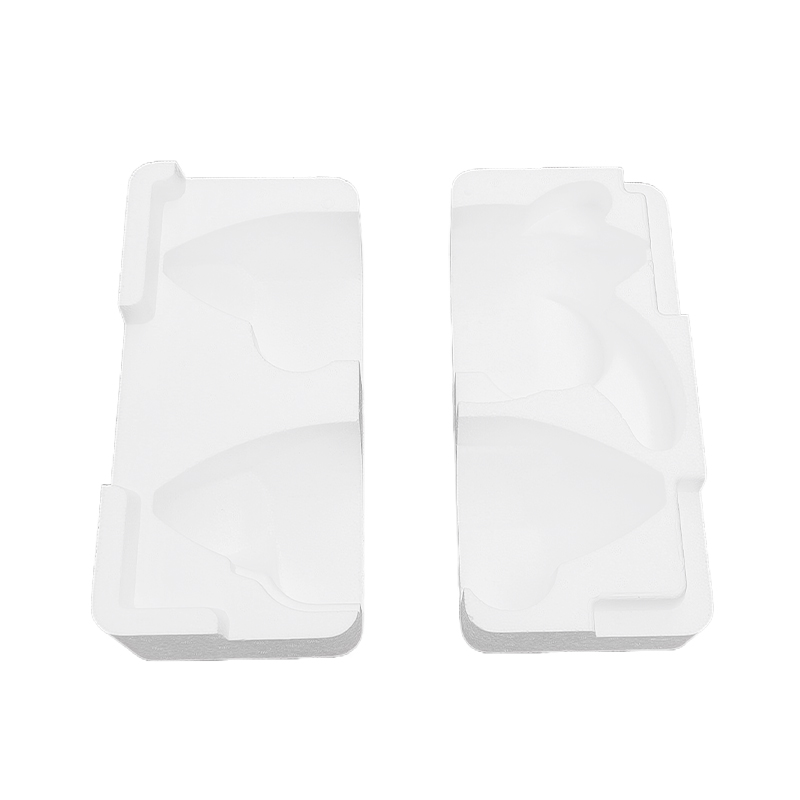
The foundation of this protective capability lies in the unique adaptability of the EPS molding process. EPS begins as small expandable beads of polystyrene containing a blowing agent. Through a precise process of pre-expansion, aging, and steam-chest molding, these beads are expanded up to 50 times their original volume and fused together inside a custom-designed aluminum mold. This manufacturing method allows engineers to create packaging that mirrors the exact geometric contours of a specific motor model. Whether the motor features a complex cylindrical housing, protruding shafts, or irregular mounting brackets, the EPS mold can be machined to accommodate every curve and angle. The result is a packaging insert that fits snugly against the motor's surface, eliminating empty voids where the product could shift during handling.
Achieving a precision fit is not merely about aesthetics; it serves a critical functional purpose in preventing friction damage caused by vibration. During transportation, trucks and cargo ships generate constant low-frequency vibrations. If a motor were to sit loosely inside a standard cardboard box, these vibrations would cause the heavy metal casing to rub incessantly against the packaging walls. Over time, this micro-movement leads to abrasion, scratching the protective paint or plating on the motor's exterior. In severe cases, such friction could even compromise the structural tolerances of the motor housing. Custom EPS packaging solves this by cradling the motor firmly in place. The tight conformity ensures that the motor and the packaging move as a single unified unit, effectively neutralizing the destructive effects of vibrational energy and keeping the surface finish pristine.
Beyond securing the exterior, custom EPS packaging plays a pivotal role in protecting the motor's delicate internal components through superior cushioning and shockproofing. The closed-cell structure of Expanded Polystyrene gives it exceptional elasticity and impact resistance. When a package is subjected to sudden shocks—such as being dropped by a handler or hitting a pothole during transit—the air trapped within the millions of tiny EPS bubbles compresses rapidly. This compression absorbs and dissipates the kinetic energy of the impact before it can be transferred to the product inside. For a motor, this means that sensitive internal elements like precision ball bearings and fragile wire windings are shielded from the jarring forces that could otherwise cause misalignment, deformation, or catastrophic failure.
Furthermore, the lightweight nature of EPS contributes significantly to logistical efficiency without sacrificing strength. Despite its incredibly low density, custom-molded EPS offers a high strength-to-weight ratio, providing robust structural support that prevents stacking damage in warehouses. It also possesses excellent thermal insulation properties, buffering the motor against rapid temperature fluctuations that could lead to condensation and subsequent corrosion during cross-climate shipping. By tailoring the density of the EPS foam—ranging from low-density options for lighter cushioning to high-density formulations for heavy-duty load-bearing—manufacturers can fine-tune the packaging to match the exact weight and fragility of the motor.
In conclusion, custom EPS packaging is far more than a simple container; it is a meticulously engineered safety device designed specifically for the complexities of modern electric motors. By leveraging the versatile molding capabilities of polystyrene to achieve a perfect geometric fit, it eliminates movement-induced friction and utilizes its inherent cellular structure to absorb devastating impacts. This ensures that every motor reaches its destination ready for immediate, reliable installation, maintaining the high standards of quality expected in the automotive and industrial sectors.
The foundation of this protective capability lies in the unique adaptability of the EPS molding process. EPS begins as small expandable beads of polystyrene containing a blowing agent. Through a precise process of pre-expansion, aging, and steam-chest molding, these beads are expanded up to 50 times their original volume and fused together inside a custom-designed aluminum mold. This manufacturing method allows engineers to create packaging that mirrors the exact geometric contours of a specific motor model. Whether the motor features a complex cylindrical housing, protruding shafts, or irregular mounting brackets, the EPS mold can be machined to accommodate every curve and angle. The result is a packaging insert that fits snugly against the motor's surface, eliminating empty voids where the product could shift during handling.
Achieving a precision fit is not merely about aesthetics; it serves a critical functional purpose in preventing friction damage caused by vibration. During transportation, trucks and cargo ships generate constant low-frequency vibrations. If a motor were to sit loosely inside a standard cardboard box, these vibrations would cause the heavy metal casing to rub incessantly against the packaging walls. Over time, this micro-movement leads to abrasion, scratching the protective paint or plating on the motor's exterior. In severe cases, such friction could even compromise the structural tolerances of the motor housing. Custom EPS packaging solves this by cradling the motor firmly in place. The tight conformity ensures that the motor and the packaging move as a single unified unit, effectively neutralizing the destructive effects of vibrational energy and keeping the surface finish pristine.
Beyond securing the exterior, custom EPS packaging plays a pivotal role in protecting the motor's delicate internal components through superior cushioning and shockproofing. The closed-cell structure of Expanded Polystyrene gives it exceptional elasticity and impact resistance. When a package is subjected to sudden shocks—such as being dropped by a handler or hitting a pothole during transit—the air trapped within the millions of tiny EPS bubbles compresses rapidly. This compression absorbs and dissipates the kinetic energy of the impact before it can be transferred to the product inside. For a motor, this means that sensitive internal elements like precision ball bearings and fragile wire windings are shielded from the jarring forces that could otherwise cause misalignment, deformation, or catastrophic failure.
Furthermore, the lightweight nature of EPS contributes significantly to logistical efficiency without sacrificing strength. Despite its incredibly low density, custom-molded EPS offers a high strength-to-weight ratio, providing robust structural support that prevents stacking damage in warehouses. It also possesses excellent thermal insulation properties, buffering the motor against rapid temperature fluctuations that could lead to condensation and subsequent corrosion during cross-climate shipping. By tailoring the density of the EPS foam—ranging from low-density options for lighter cushioning to high-density formulations for heavy-duty load-bearing—manufacturers can fine-tune the packaging to match the exact weight and fragility of the motor.
In conclusion, custom EPS packaging is far more than a simple container; it is a meticulously engineered safety device designed specifically for the complexities of modern electric motors. By leveraging the versatile molding capabilities of polystyrene to achieve a perfect geometric fit, it eliminates movement-induced friction and utilizes its inherent cellular structure to absorb devastating impacts. This ensures that every motor reaches its destination ready for immediate, reliable installation, maintaining the high standards of quality expected in the automotive and industrial sectors.