



How Does Battery EPS Packaging Redefine Safety Standards in Precision Logistics?
Release Time : 2026-06-16
In the grand narrative of modern energy technology, batteries, as the core power source, have always been a focus of industry attention regarding their safety and integrity. From sophisticated consumer electronics to massive new energy vehicle powertrains, batteries must undergo a long and risky logistics journey before reaching the end user. In this game of safety, battery EPS packaging, with its superior physical properties and highly flexible engineering design, has become a solid shield protecting the heart of energy, establishing a new safety standard in the field of precision logistics.
The core value of EPS foam material lies in its amazing impact and pressure resistance. Batteries, especially lithium batteries with their intricate internal structure, are extremely sensitive to drastic changes in the external environment. During handling, loading and unloading, and long-distance transportation, packaging boxes inevitably encounter drops, collisions, or heavy stacking pressure. The unique closed-cell structure inside EPS foam gives it excellent energy absorption capabilities. When external impacts occur, this material can quickly dissipate energy through its own microscopic deformation, thus building a highly efficient buffer barrier. This cushioning mechanism effectively blocks the transmission of violent impacts to the battery body, resolutely preventing the battery casing from cracking due to uneven stress, and fundamentally avoiding the risk of damage to the internal cells due to compression. For battery products with extremely high structural integrity requirements, this passive safety protection is the first line of defense to ensure its performance stability and safe use.
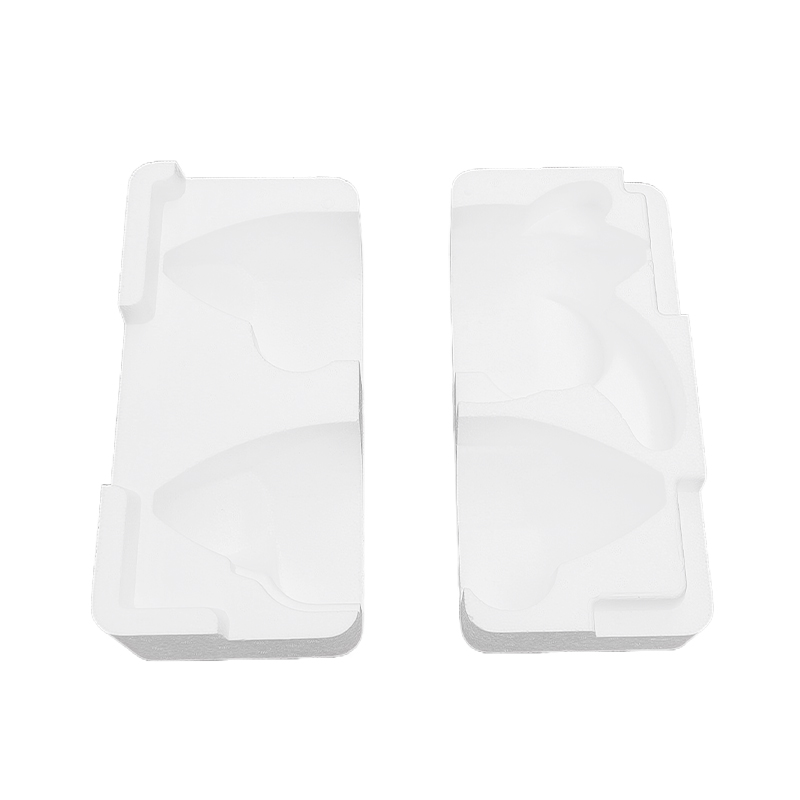
In addition to its robust protective capabilities, the high degree of customizability in the structural design of EPS packaging allows it to perfectly adapt to battery products of various shapes. The development of the battery industry has given rise to cylindrical, square, and even irregularly shaped battery modules, and general packaging solutions can no longer meet current needs. The excellent plasticity of EPS material allows engineers to mold precise grooves, partitions, and complex support structures according to the specific dimensions and geometry of the battery. This customized packaging method not only achieves independent fixation of individual cells, but also plays a crucial role in isolation in components with multiple cells connected in parallel or series. Through precise limiting design, the battery is firmly locked inside the packaging, completely eliminating friction and collisions caused by shaking during transportation, ensuring that each cell arrives at its destination in a stationary and safe state.
While pursuing ultimate safety, EPS packaging perfectly embodies the modern logistics pursuit of lightweight design and space efficiency. Compared to traditional wooden or metal packaging, the extremely low density of EPS material means it adds almost no extra weight to the battery pack. In today's world of ever-increasing logistics costs, this lightweight characteristic directly translates into reduced transportation costs and carbon emissions. Simultaneously, the design language that closely conforms to the battery's contours minimizes packaging volume, eliminating unnecessary space waste. This compact packaging solution not only improves the utilization rate of warehouse space but also optimizes the loading rate of containers and trucks, significantly enhancing the overall efficiency of the supply chain.
With its superior cushioning and energy absorption characteristics, flexible structural design, and lightweight, efficient space performance, battery EPS packaging successfully addresses the safety concerns in battery transportation. It is not merely a simple container but a sophisticated protective system integrating materials science and structural mechanics. In the booming wave of green energy development, this reliable packaging solution will continue to silently safeguard the safe journey of every battery, protecting the popularization and application of energy technologies.
The core value of EPS foam material lies in its amazing impact and pressure resistance. Batteries, especially lithium batteries with their intricate internal structure, are extremely sensitive to drastic changes in the external environment. During handling, loading and unloading, and long-distance transportation, packaging boxes inevitably encounter drops, collisions, or heavy stacking pressure. The unique closed-cell structure inside EPS foam gives it excellent energy absorption capabilities. When external impacts occur, this material can quickly dissipate energy through its own microscopic deformation, thus building a highly efficient buffer barrier. This cushioning mechanism effectively blocks the transmission of violent impacts to the battery body, resolutely preventing the battery casing from cracking due to uneven stress, and fundamentally avoiding the risk of damage to the internal cells due to compression. For battery products with extremely high structural integrity requirements, this passive safety protection is the first line of defense to ensure its performance stability and safe use.
In addition to its robust protective capabilities, the high degree of customizability in the structural design of EPS packaging allows it to perfectly adapt to battery products of various shapes. The development of the battery industry has given rise to cylindrical, square, and even irregularly shaped battery modules, and general packaging solutions can no longer meet current needs. The excellent plasticity of EPS material allows engineers to mold precise grooves, partitions, and complex support structures according to the specific dimensions and geometry of the battery. This customized packaging method not only achieves independent fixation of individual cells, but also plays a crucial role in isolation in components with multiple cells connected in parallel or series. Through precise limiting design, the battery is firmly locked inside the packaging, completely eliminating friction and collisions caused by shaking during transportation, ensuring that each cell arrives at its destination in a stationary and safe state.
While pursuing ultimate safety, EPS packaging perfectly embodies the modern logistics pursuit of lightweight design and space efficiency. Compared to traditional wooden or metal packaging, the extremely low density of EPS material means it adds almost no extra weight to the battery pack. In today's world of ever-increasing logistics costs, this lightweight characteristic directly translates into reduced transportation costs and carbon emissions. Simultaneously, the design language that closely conforms to the battery's contours minimizes packaging volume, eliminating unnecessary space waste. This compact packaging solution not only improves the utilization rate of warehouse space but also optimizes the loading rate of containers and trucks, significantly enhancing the overall efficiency of the supply chain.
With its superior cushioning and energy absorption characteristics, flexible structural design, and lightweight, efficient space performance, battery EPS packaging successfully addresses the safety concerns in battery transportation. It is not merely a simple container but a sophisticated protective system integrating materials science and structural mechanics. In the booming wave of green energy development, this reliable packaging solution will continue to silently safeguard the safe journey of every battery, protecting the popularization and application of energy technologies.