



How can batteries EPS packaging reduce the risk of battery damage during transportation due to collisions and drops through superior cushioning performance?
Release Time : 2026-06-24
With the rapid development of the new energy industry, consumer electronics industry, and energy storage market, the transportation demand for various lithium batteries, power batteries, and industrial batteries is constantly increasing. Because of the precise internal structure of battery products, they are highly sensitive to external impacts, compression, and vibrations. Collisions or drops during transportation can not only deform the outer casing but also affect the performance of the internal cells and even pose safety hazards. Therefore, choosing a reliable packaging protection solution is crucial. Batteries EPS packaging, with its excellent cushioning performance, lightweight characteristics, and good structural flexibility, has become a widely used protective packaging material in the battery transportation field. By efficiently absorbing and dispersing external impact forces, EPS packaging can effectively reduce the risk of damage during transportation, providing comprehensive protection for battery products.
1. Absorbing Collision Impact Energy
During logistics transportation, battery packaging inevitably suffers from external forces such as handling collisions, vehicle bumps, and loading/unloading impacts. Without effective cushioning protection, the impact force will directly act on the battery body, increasing the risk of outer casing cracking or internal structural damage. EPS material is composed of numerous independent, closed air bubbles. When subjected to external impact, these bubbles compress and deform, absorbing and dissipating some of the impact energy. This buffering mechanism effectively weakens the instantaneous impact force, reducing direct damage to the battery and improving transportation safety.
2. Reduced Risk of Damage from Drops
Accidental drops of packaging are common in warehousing and logistics. Especially for high-value lithium battery products, a significant impact from a drop can cause deformation of the battery casing, loosening of connecting parts, and even damage to the internal cells. EPS packaging has excellent resilience and energy absorption capabilities. When the packaging is dropped, EPS can extend the stress time through compression deformation, reducing the peak impact and significantly reducing the impact load on the battery. This not only protects the battery's exterior integrity but also effectively maintains the stability of the internal structure.
3. Prevention of Battery Collisions
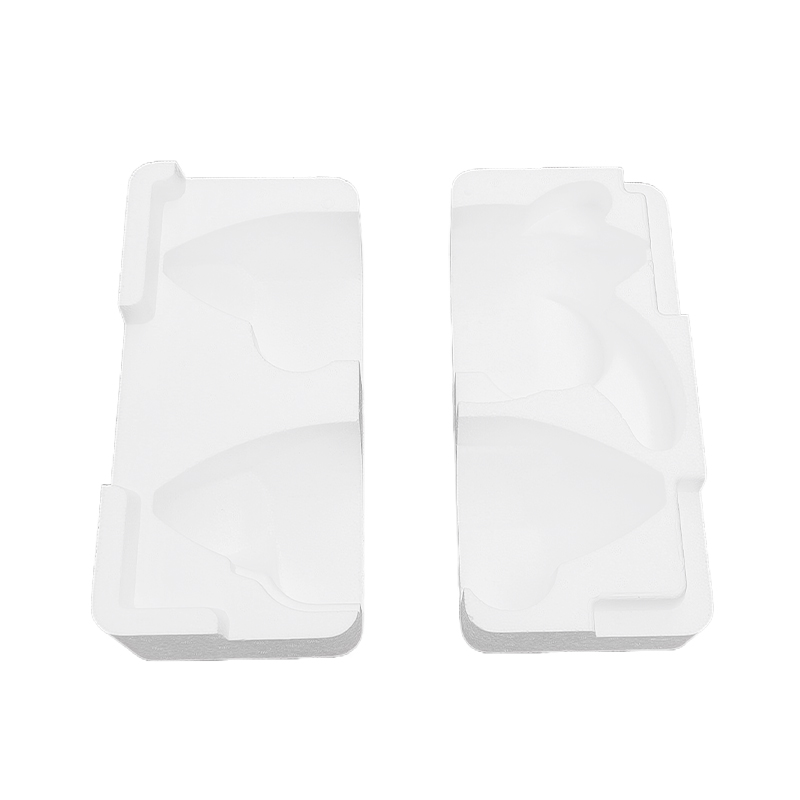
During bulk transportation, if multiple batteries are in direct contact, they are prone to friction and collision due to transport vibrations, leading to surface scratches or structural damage. EPS packaging can be designed with dedicated grooves, separators, and positioning structures according to the shape and size of the batteries to achieve independent fixation of individual batteries. Whether cylindrical, prismatic, or irregularly shaped, batteries can be securely embedded within the packaging, preventing contact and displacement, thus reducing the risk of collisions during transportation.
4. Enhanced Compression Resistance
Besides collisions and drops, battery packaging also needs to withstand stacking pressure during storage and transportation. Insufficient packaging compression resistance can easily lead to packaging deformation or even damage to the product. EPS material not only has excellent cushioning properties but also good compressive strength. By rationally designing the packaging thickness and support structure, external pressure can be evenly distributed across the entire packaging surface, avoiding excessive localized stress. This plays a crucial role in protecting the integrity of the battery casing and maintaining the stability of the internal structure.
5. Improved Overall Transportation Safety
Modern logistics and transportation environments are complex and ever-changing, with products potentially undergoing multiple loading and unloading, transshipment, and long-distance transportation. As high-value products, batteries have particularly stringent packaging protection requirements. EPS packaging combines multiple functions such as cushioning, shock absorption, compression resistance, and positioning to form a comprehensive protection system. Its lightweight characteristics do not significantly increase transportation weight while effectively improving packaging efficiency and logistics turnover capacity. Through stable and reliable protection, EPS packaging helps businesses reduce transportation losses and after-sales costs.
Effective batteries EPS packaging plays a crucial role in battery transportation protection due to its superior cushioning performance and excellent structural design. By absorbing impact energy, reducing drop damage, preventing collisions, enhancing compression resistance, and improving overall transportation safety, EPS packaging effectively protects the structural integrity and performance stability of battery products.
1. Absorbing Collision Impact Energy
During logistics transportation, battery packaging inevitably suffers from external forces such as handling collisions, vehicle bumps, and loading/unloading impacts. Without effective cushioning protection, the impact force will directly act on the battery body, increasing the risk of outer casing cracking or internal structural damage. EPS material is composed of numerous independent, closed air bubbles. When subjected to external impact, these bubbles compress and deform, absorbing and dissipating some of the impact energy. This buffering mechanism effectively weakens the instantaneous impact force, reducing direct damage to the battery and improving transportation safety.
2. Reduced Risk of Damage from Drops
Accidental drops of packaging are common in warehousing and logistics. Especially for high-value lithium battery products, a significant impact from a drop can cause deformation of the battery casing, loosening of connecting parts, and even damage to the internal cells. EPS packaging has excellent resilience and energy absorption capabilities. When the packaging is dropped, EPS can extend the stress time through compression deformation, reducing the peak impact and significantly reducing the impact load on the battery. This not only protects the battery's exterior integrity but also effectively maintains the stability of the internal structure.
3. Prevention of Battery Collisions
During bulk transportation, if multiple batteries are in direct contact, they are prone to friction and collision due to transport vibrations, leading to surface scratches or structural damage. EPS packaging can be designed with dedicated grooves, separators, and positioning structures according to the shape and size of the batteries to achieve independent fixation of individual batteries. Whether cylindrical, prismatic, or irregularly shaped, batteries can be securely embedded within the packaging, preventing contact and displacement, thus reducing the risk of collisions during transportation.
4. Enhanced Compression Resistance
Besides collisions and drops, battery packaging also needs to withstand stacking pressure during storage and transportation. Insufficient packaging compression resistance can easily lead to packaging deformation or even damage to the product. EPS material not only has excellent cushioning properties but also good compressive strength. By rationally designing the packaging thickness and support structure, external pressure can be evenly distributed across the entire packaging surface, avoiding excessive localized stress. This plays a crucial role in protecting the integrity of the battery casing and maintaining the stability of the internal structure.
5. Improved Overall Transportation Safety
Modern logistics and transportation environments are complex and ever-changing, with products potentially undergoing multiple loading and unloading, transshipment, and long-distance transportation. As high-value products, batteries have particularly stringent packaging protection requirements. EPS packaging combines multiple functions such as cushioning, shock absorption, compression resistance, and positioning to form a comprehensive protection system. Its lightweight characteristics do not significantly increase transportation weight while effectively improving packaging efficiency and logistics turnover capacity. Through stable and reliable protection, EPS packaging helps businesses reduce transportation losses and after-sales costs.
Effective batteries EPS packaging plays a crucial role in battery transportation protection due to its superior cushioning performance and excellent structural design. By absorbing impact energy, reducing drop damage, preventing collisions, enhancing compression resistance, and improving overall transportation safety, EPS packaging effectively protects the structural integrity and performance stability of battery products.