



How does the high cushioning performance of Batteries EPS Packaging help protect the lithium battery casing and internal cells?
Release Time : 2026-08-19
During the production, storage, and transportation of lithium batteries, packaging not only needs to secure the product but also reduce the impact of external shocks, compression, and vibrations on the battery. Batteries EPS Packaging, with its lightweight materials, excellent cushioning performance, and customizable structure, can be designed with a dedicated protective space according to the size and shape of the battery, providing more stable protection for the battery casing and internal structure.
1. Absorbing Shocks, Reducing Casing Damage
Lithium batteries may be affected by external forces such as drops and collisions during handling and transportation. If the packaging cushioning is insufficient, the impact force can easily act directly on the battery casing. EPS packaging has a certain degree of elasticity and cushioning capacity. When subjected to external impacts, it can absorb and disperse some energy through its own deformation, thereby reducing the degree to which the impact force is transmitted to the battery surface. For battery products with high requirements for surface flatness and structural integrity, this cushioning effect helps reduce transportation damage such as bumps, dents, and scratches.
2. Dispersing Pressure, Protecting Internal Cells
The lithium battery casing typically contains the cells and related components, which are highly sensitive to external impacts and compression. EPS packaging, by forming a cushioning protective layer around the battery, can disperse concentrated forces to a certain extent, preventing excessive instantaneous pressure on any one part of the battery. When the packaging box is squeezed or dropped short distances, a well-designed EPS cushioning structure can provide additional buffer space for the battery, reducing the possibility of severe impact on the internal structure.
3. Customized slots to reduce shaking during transportation
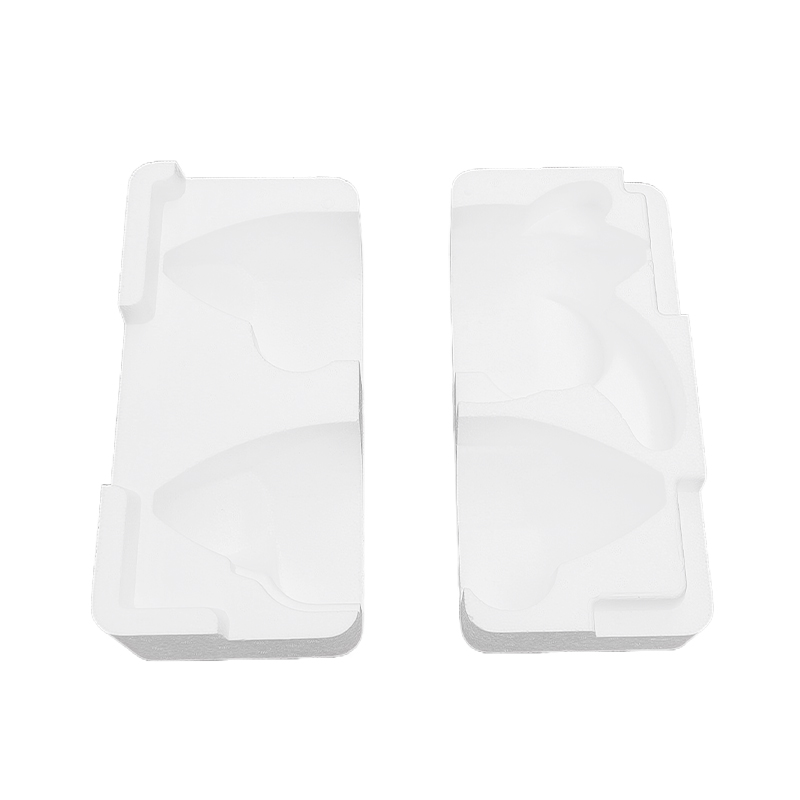
Besides the cushioning performance of the material itself, the structural design of EPS packaging is equally important. Depending on the length, width, height, and shape of different lithium batteries, corresponding grooves, separators, and positioning structures can be customized to ensure the batteries are stably placed in an independent space. Precise positioning reduces the product's movement within the packaging, preventing direct collisions between batteries, and also reduces friction and displacement caused by continuous vibrations from transport vehicles.
4. Multiple layers of protection to adapt to complex transportation environments
Battery products may experience various situations during logistics, including loading and unloading, handling, vehicle bumps, and warehouse stacking. Relying solely on the outer packaging box is often insufficient to completely eliminate these external influences, while the EPS liner can act as a buffer layer between the battery and the outer packaging. By strategically designing protective zones on the bottom, sides, and top, a relatively complete three-dimensional protective structure can be formed, ensuring the battery remains relatively stable under various transportation conditions.
5. Lightweight Design Improves Logistics Efficiency
Batteries EPS Packaging itself is lightweight, providing cushioning without significantly increasing the overall packaging weight. For lithium battery products requiring bulk transportation, lightweight packaging reduces the additional weight burden of packaging materials on logistics. Furthermore, EPS can be tightly customized to the battery's shape, making efficient use of packaging space while meeting protection requirements, thus improving warehousing and transportation efficiency.
Overall, the high cushioning performance of Batteries EPS Packaging contributes to multiple aspects, including reducing external impacts, dispersing localized pressure, and minimizing product displacement, providing multi-layered protection for the lithium battery casing and internal cells. Combined with customized slots, separators, and a tightly fitting structure, EPS packaging can better adapt to the transportation needs of batteries of different sizes. In practical applications, well-designed cushioning packaging not only helps reduce product damage during transportation but also balances lightweight design, space utilization, and bulk logistics efficiency, providing a more reliable packaging solution for battery products.
1. Absorbing Shocks, Reducing Casing Damage
Lithium batteries may be affected by external forces such as drops and collisions during handling and transportation. If the packaging cushioning is insufficient, the impact force can easily act directly on the battery casing. EPS packaging has a certain degree of elasticity and cushioning capacity. When subjected to external impacts, it can absorb and disperse some energy through its own deformation, thereby reducing the degree to which the impact force is transmitted to the battery surface. For battery products with high requirements for surface flatness and structural integrity, this cushioning effect helps reduce transportation damage such as bumps, dents, and scratches.
2. Dispersing Pressure, Protecting Internal Cells
The lithium battery casing typically contains the cells and related components, which are highly sensitive to external impacts and compression. EPS packaging, by forming a cushioning protective layer around the battery, can disperse concentrated forces to a certain extent, preventing excessive instantaneous pressure on any one part of the battery. When the packaging box is squeezed or dropped short distances, a well-designed EPS cushioning structure can provide additional buffer space for the battery, reducing the possibility of severe impact on the internal structure.
3. Customized slots to reduce shaking during transportation
Besides the cushioning performance of the material itself, the structural design of EPS packaging is equally important. Depending on the length, width, height, and shape of different lithium batteries, corresponding grooves, separators, and positioning structures can be customized to ensure the batteries are stably placed in an independent space. Precise positioning reduces the product's movement within the packaging, preventing direct collisions between batteries, and also reduces friction and displacement caused by continuous vibrations from transport vehicles.
4. Multiple layers of protection to adapt to complex transportation environments
Battery products may experience various situations during logistics, including loading and unloading, handling, vehicle bumps, and warehouse stacking. Relying solely on the outer packaging box is often insufficient to completely eliminate these external influences, while the EPS liner can act as a buffer layer between the battery and the outer packaging. By strategically designing protective zones on the bottom, sides, and top, a relatively complete three-dimensional protective structure can be formed, ensuring the battery remains relatively stable under various transportation conditions.
5. Lightweight Design Improves Logistics Efficiency
Batteries EPS Packaging itself is lightweight, providing cushioning without significantly increasing the overall packaging weight. For lithium battery products requiring bulk transportation, lightweight packaging reduces the additional weight burden of packaging materials on logistics. Furthermore, EPS can be tightly customized to the battery's shape, making efficient use of packaging space while meeting protection requirements, thus improving warehousing and transportation efficiency.
Overall, the high cushioning performance of Batteries EPS Packaging contributes to multiple aspects, including reducing external impacts, dispersing localized pressure, and minimizing product displacement, providing multi-layered protection for the lithium battery casing and internal cells. Combined with customized slots, separators, and a tightly fitting structure, EPS packaging can better adapt to the transportation needs of batteries of different sizes. In practical applications, well-designed cushioning packaging not only helps reduce product damage during transportation but also balances lightweight design, space utilization, and bulk logistics efficiency, providing a more reliable packaging solution for battery products.