



How does EPS filler achieve zero-displacement protection through customized grooves and surrounding structures?
Release Time : 2026-01-12
In the home appliance logistics chain, a brand-new TV, refrigerator, or washing machine often undergoes multiple handling, stacking, long-distance transportation, and even accidental drops from the production line to the user's home. Even if the outer casing is sturdy, if there is a lack of effective internal fixation, the appliance will shake and collide inside the casing, causing minor scratches to the outer casing, or more serious damage such as screen breakage, compressor displacement, or circuit board detachment. At this time, EPS (expanded polystyrene) plays the role of a "tailor-made guardian." It doesn't rely on brute force to block impacts, but rather uses precise geometry and material properties to firmly "lock" the appliance in a safe position, achieving true zero-displacement protection.
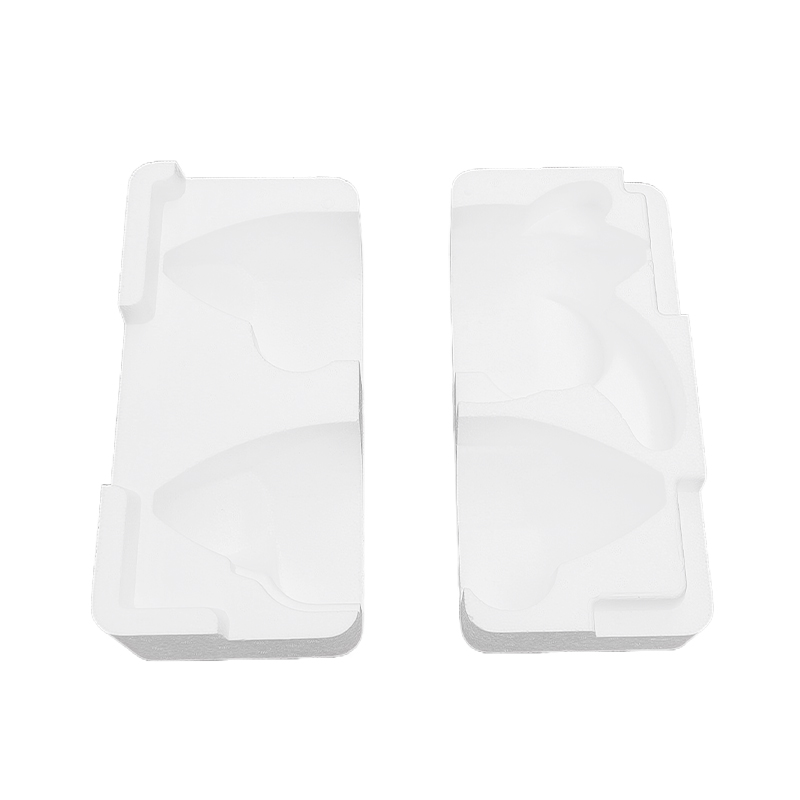
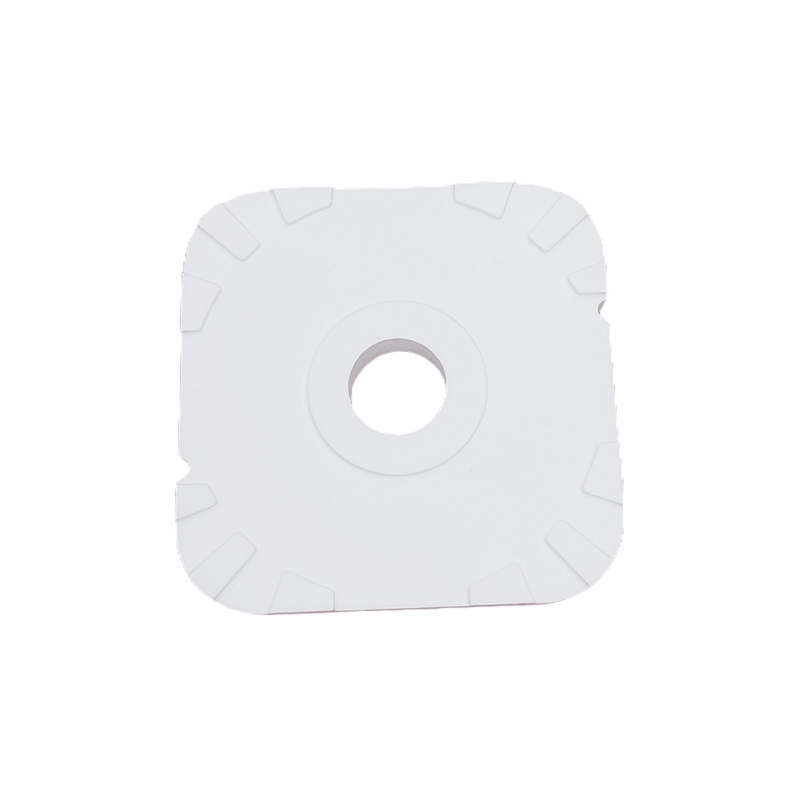
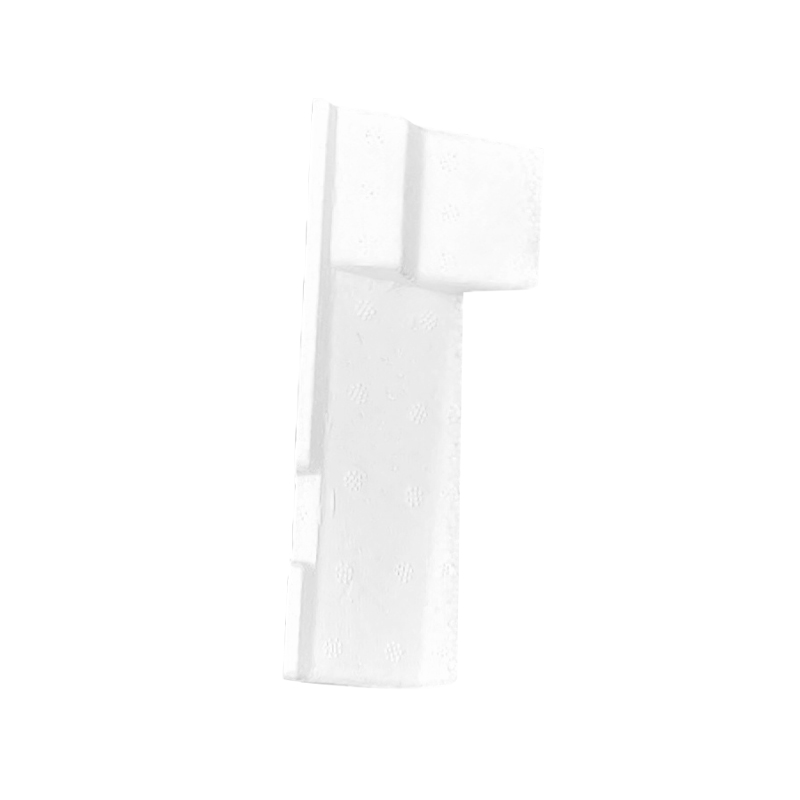
The core of this protection lies in highly customized structural design. Unlike the "one-size-fits-all" approach of general-purpose foam pads, high-quality EPS filler involves intervention from the early stages of product development—engineers conduct 3D scanning and stress analysis based on the specific shape of the appliance, its center of gravity distribution, and vulnerable areas (such as the glass panel of a TV, the condenser coil of a refrigerator, and the control panel of a washing machine). Subsequently, using CNC molding technology, grooves, protrusions, and surrounding slots are precisely sculpted to perfectly match the contours of the electrical appliance. When the appliance is embedded, every curve, every interface, and every protruding component is gently encased, as if forging a custom-made "armor." This fit is not simply about containment, but a point-to-point, face-to-face physical lock, ensuring that no matter how the box tilts, vibrates, or flips, the internal appliance remains rock-solid with no room for slippage.
Even more ingeniously, these structures not only provide fixation but also function as graded buffers and stress dispersion. For example, a slightly raised ring around the screen prevents frontal impacts and avoids direct friction between cleaning cloths or packaging film and the glass; a thickened honeycomb support area at the bottom of the compressor absorbs vertical impact energy; and in areas prone to compression on the sides, a porous structure with varying density is used to evenly distribute localized high pressure throughout the entire filling. This intelligent layout, prioritizing protection where vulnerable areas are, maximizes the protective effectiveness of limited materials.
Meanwhile, the porous closed-cell structure of the EPS material itself provides the physical basis for zero displacement. Countless tiny air chambers elastically deform under pressure, rapidly absorbing and dissipating external kinetic energy before returning to their original shape without permanent compression or collapse. This means that even after repeated loading and unloading, the filler maintains its initial shape and clamping force, continuously providing stable support. Furthermore, its smooth surface and lack of fiber shedding avoid the risk of dust contaminating internal components of appliances, making it particularly suitable for high-end appliances requiring cleanliness.
It's worth noting that this customization is not unattainable. Modern EPS molding technology supports rapid mold changes and flexible production, allowing for the development of matching filling solutions even for small to medium batches of new products in a short time. Its lightweight nature also doesn't significantly increase the overall packaging weight, balancing transportation costs and environmental considerations.
Ultimately, the true value of EPS fillers lies not in their bulkiness, but in their understanding of the "vulnerability" of appliances and their silent, gentle protection. When a television travels thousands of miles and arrives unboxed still pristine, behind the scenes lies a seemingly ordinary layer of white foam. Precise grooves and a surrounding structure create an invisible yet incredibly robust defense. Because in this era of precision manufacturing, true security doesn't rely on luck, but on meticulous attention to detail in every millimeter.
The core of this protection lies in highly customized structural design. Unlike the "one-size-fits-all" approach of general-purpose foam pads, high-quality EPS filler involves intervention from the early stages of product development—engineers conduct 3D scanning and stress analysis based on the specific shape of the appliance, its center of gravity distribution, and vulnerable areas (such as the glass panel of a TV, the condenser coil of a refrigerator, and the control panel of a washing machine). Subsequently, using CNC molding technology, grooves, protrusions, and surrounding slots are precisely sculpted to perfectly match the contours of the electrical appliance. When the appliance is embedded, every curve, every interface, and every protruding component is gently encased, as if forging a custom-made "armor." This fit is not simply about containment, but a point-to-point, face-to-face physical lock, ensuring that no matter how the box tilts, vibrates, or flips, the internal appliance remains rock-solid with no room for slippage.
Even more ingeniously, these structures not only provide fixation but also function as graded buffers and stress dispersion. For example, a slightly raised ring around the screen prevents frontal impacts and avoids direct friction between cleaning cloths or packaging film and the glass; a thickened honeycomb support area at the bottom of the compressor absorbs vertical impact energy; and in areas prone to compression on the sides, a porous structure with varying density is used to evenly distribute localized high pressure throughout the entire filling. This intelligent layout, prioritizing protection where vulnerable areas are, maximizes the protective effectiveness of limited materials.
Meanwhile, the porous closed-cell structure of the EPS material itself provides the physical basis for zero displacement. Countless tiny air chambers elastically deform under pressure, rapidly absorbing and dissipating external kinetic energy before returning to their original shape without permanent compression or collapse. This means that even after repeated loading and unloading, the filler maintains its initial shape and clamping force, continuously providing stable support. Furthermore, its smooth surface and lack of fiber shedding avoid the risk of dust contaminating internal components of appliances, making it particularly suitable for high-end appliances requiring cleanliness.
It's worth noting that this customization is not unattainable. Modern EPS molding technology supports rapid mold changes and flexible production, allowing for the development of matching filling solutions even for small to medium batches of new products in a short time. Its lightweight nature also doesn't significantly increase the overall packaging weight, balancing transportation costs and environmental considerations.
Ultimately, the true value of EPS fillers lies not in their bulkiness, but in their understanding of the "vulnerability" of appliances and their silent, gentle protection. When a television travels thousands of miles and arrives unboxed still pristine, behind the scenes lies a seemingly ordinary layer of white foam. Precise grooves and a surrounding structure create an invisible yet incredibly robust defense. Because in this era of precision manufacturing, true security doesn't rely on luck, but on meticulous attention to detail in every millimeter.