



How can the electrostatic protection design of batteries EPS packaging reduce the risk of electrostatic damage to electronic components through surface coating technology?
Release Time : 2026-02-09
During transportation and storage, EPS packaging requires a multi-layered electrostatic discharge (ESD) protection system constructed using surface coating technology to reduce the risk of damage to electronic components due to ESD. The core principle lies in utilizing the conductivity or antistatic properties of the coating to provide a controllable discharge path for static charges, preventing charge accumulation on the packaging or electronic component surfaces to dangerous levels. This process requires a combination of materials science, electrical principles, and process control, forming a complete technology chain from coating selection to performance verification.
The key to surface coating technology lies in selecting antistatic or conductive materials with a specific resistance range. While traditional EPS materials possess excellent cushioning properties, their insulating characteristics easily lead to ESD accumulation. By coating the EPS surface with a polymer coating containing conductive fillers, its surface resistance can be significantly reduced. For example, coatings with added carbon nanotubes, graphene, or metal powder can form a conductive network, stabilizing the surface resistance within the range of 10⁶–10⁹ Ω, preventing both rapid ESD accumulation and the risk of short circuits due to excessively low resistance. Such coatings must balance conductivity and adhesion to ensure they do not peel off under transportation vibrations or changes in ambient temperature and humidity. The control of the coating process directly affects the electrostatic protection effect. Processes such as spraying, dip coating, or electrophoretic deposition need to be optimized according to the shape and size of the EPS packaging. For example, for battery trays with complex structures, spraying can achieve uniform coverage, while electrophoretic deposition is suitable for scenarios requiring high-precision control. Process parameters such as coating thickness, curing temperature, and time need to be strictly controlled: insufficient thickness may lead to substandard conductivity, while excessive thickness may affect the dimensional accuracy of the packaging or increase costs; excessively high curing temperatures may cause EPS deformation, while excessively low temperatures will lead to decreased coating adhesion. Therefore, it is necessary to determine the optimal process window through experiments to ensure stable coating performance.
Environmental adaptability is an important consideration in coating technology. Battery packaging may face extreme environments such as high and low temperatures, humidity, or dryness, and the coating must maintain stable performance under these conditions. For example, in low-temperature environments, the brittleness of the coating may increase, leading to cracking or peeling; in humid environments, moisture may penetrate the coating, altering its conductivity. Adding desiccant or using hydrophobic resin substrates can improve the environmental resistance of the coating. In addition, the coating must be chemically resistant to prevent reaction with battery electrolytes or other chemicals, ensuring long-term protective effectiveness.
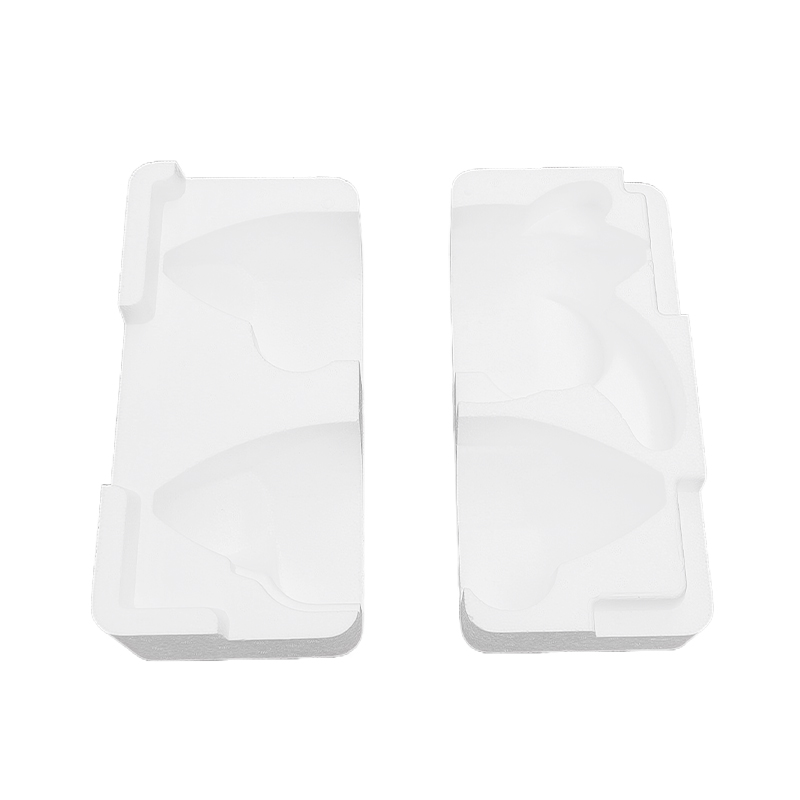
Coordinated design with the packaging structure is key to improving protective efficiency. Battery EPS packaging typically employs a multi-layered structure, such as an inner cushioning layer, a middle anti-static layer, and an outer protective layer. The coating must match the overall structure: for example, the inner coating, which directly contacts electronic components, needs higher surface resistance to prevent short circuits, while simultaneously guiding static charges to the outer packaging layer through conductive paths; the outer coating needs stronger abrasion and scratch resistance to prevent damage during transportation that could lead to protective failure. Furthermore, the interfacial bonding strength between the coating and the EPS substrate needs to be enhanced through surface treatment or a primer to prevent delamination that could reduce protective performance.
Performance verification is the final step in ensuring the reliability of the coating technology. The coating's electrostatic protection capability must be evaluated using standard testing methods, such as surface resistance testing, electrostatic decay time testing, and simulated transport vibration testing. For example, the IEC 61340 standard specifies the electrostatic protection requirements for electronic component packaging; coatings must pass this certification before being applied in real-world scenarios. Furthermore, long-term reliability tests, such as salt spray tests and high-temperature and high-humidity tests, can verify the durability of the coating in extreme environments, providing data support for packaging design.
The electrostatic discharge (ESD) protection design of battery EPS packaging achieves end-to-end optimization from material selection and process control to environmental adaptability through surface coating technology. This technology not only reduces the risk of ESD damage to electronic components during transportation and storage but also drives the packaging industry towards high performance and multifunctionality. In the future, with advancements in nanomaterials and intelligent coating technologies, ESD protection in battery packaging will become more precise and efficient, providing a solid guarantee for the safe operation of the new energy industry chain.