



How does wires EPS packaging provide both scratch protection and chemical compatibility?
Release Time : 2026-02-19
In the modern transportation and storage of wires and cables, packaging is not only a physical protective barrier but also a crucial line of defense ensuring product quality. Wire insulation layers are mostly made of polymer materials such as PVC, PE, and XLPE, which are extremely sensitive to chemical corrosion. Wires EPS packaging, with its softness, elasticity, and chemical inertness, has become the industry's preferred solution. It effectively prevents friction and scratches during transportation while ensuring that no chemical reaction occurs during long-term contact with the wire insulation layer.
1. EPS Material Characteristics: A Balance Between Softness, Elasticity, and Chemical Inertness
The core advantage of EPS (expanded polystyrene) material lies in its unique closed-cell foam structure. Countless tiny bubbles form an elastic buffer layer. When the wire is placed within it, the foam adapts to the wire's contour, achieving a tight wrap without creating rigid pressure. This soft characteristic ensures even pressure distribution between the packaging and the wire surface, avoiding localized stress concentration that could lead to insulation indentation or deformation. More importantly, EPS material itself is chemically stable and does not contain plasticizers, halogens, or other active substances that may migrate to the surface of wires. It will not swell, become brittle, or discolor when in contact with common insulation materials such as PVC and PE, eliminating the risk of chemical corrosion at the source.
2. Surface Passivation Treatment: Eliminating Potential Chemical Reaction Hazards
Although the EPS substrate itself is chemically inert, residual foaming agents, release agents, and other auxiliary chemicals from the production process can become corrosion hazards. High-quality wires EPS packaging undergoes surface passivation treatment after molding, using high-temperature curing or vacuum degassing processes to completely remove residual volatile substances. Some high-end products also use food-grade EPS raw materials, whose purity standards far exceed industrial-grade requirements, ensuring that no harmful components are released even after long-term contact with the wire insulation layer. This treatment process ensures that the packaging is "chemically stabilized" before leaving the factory, providing a truly safe storage environment for the wires.
3. Groove and Spiral Structures: Synergistic Effect of Physical Protection and Processing Efficiency
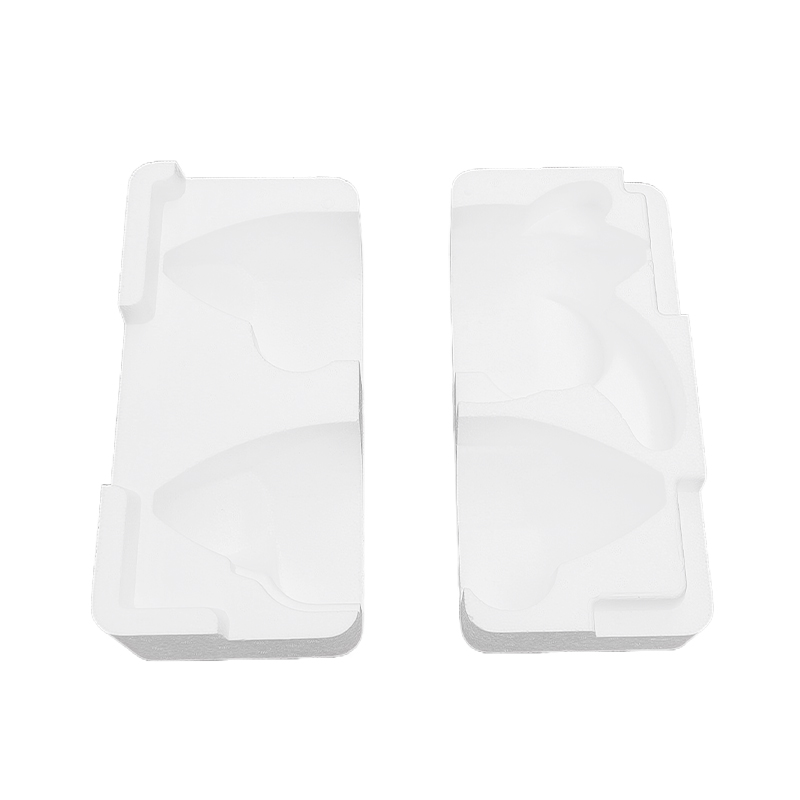
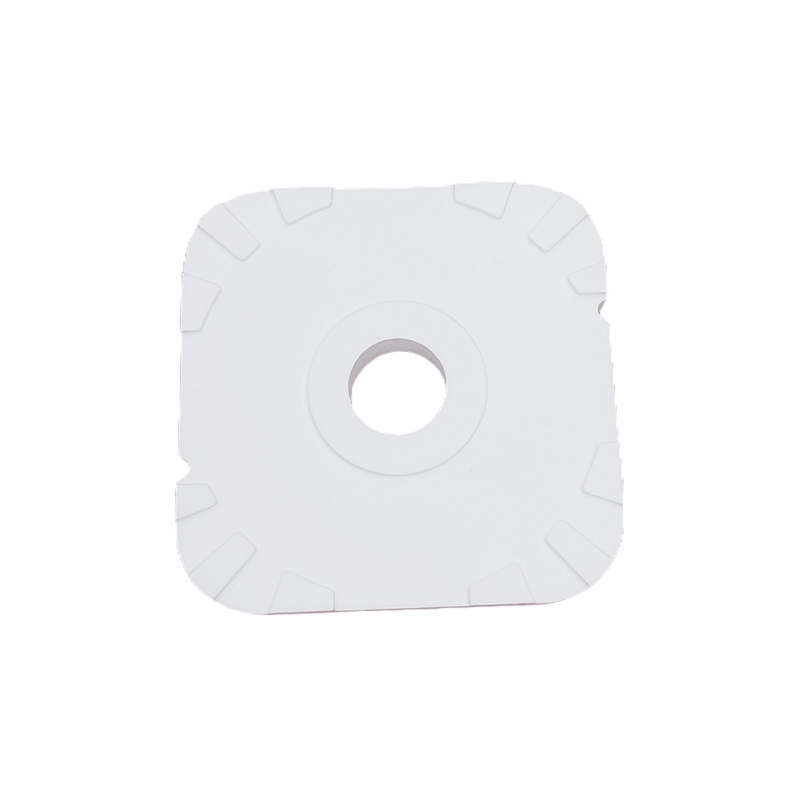
The structural design of EPS packaging directly affects the protective effect and ease of use. The slotted design features semi-circular grooves along the length of the wire. Once the wire is embedded, the foam on both sides creates a clamping force, preventing lateral sliding friction and avoiding tangling of multiple wires. The spiral structure uses continuous spiral grooves to achieve orderly coiling of the wire, allowing for smooth pull-out along the spiral path without untying or disconnecting the wires. Both structures utilize the elastic recovery properties of EPS; the foam slightly compresses to create a holding force after the wire is inserted, and quickly returns to its original shape after removal, allowing for reuse. This design achieves scratch and wear resistance while significantly improving warehouse management efficiency, making it particularly suitable for scenarios requiring frequent wire handling, such as construction sites and power engineering projects.
4. Compatibility Testing System: Ensuring Long-Term Storage Safety
To verify the chemical compatibility between EPS packaging and wire insulation, the industry has established systematic testing standards. Accelerated aging tests place the wire and EPS packaging in a high-temperature, high-humidity environment for hundreds of hours, subsequently testing changes in tensile strength, elongation at break, and surface hardness of the insulation layer. Migration tests use chromatographic analysis to detect whether any substances in the EPS migrate to the wire surface. Only packaging solutions that pass the complete set of tests can obtain industry certification. This rigorous verification system ensures that the insulation performance of wires consistently meets factory standards during storage periods of months or even years, avoiding hidden quality losses due to packaging issues.
The value of wires EPS packaging for wires lies not only in physical protection but also in ensuring the chemical safety of the wire insulation layer. From the chemical inertness of the material formulation to the passivation process of surface treatment and the protective efficiency of the structural design, every step is crucial to the final quality of the wire product. For wire and cable manufacturers and users, choosing a compatibility-proven EPS packaging solution reduces transportation and storage losses while ensuring long-term stable insulation performance. In today's pursuit of efficient logistics and green development, this seemingly simple packaging material is using professional technology to safeguard the safety and reliability of every meter of wire.
1. EPS Material Characteristics: A Balance Between Softness, Elasticity, and Chemical Inertness
The core advantage of EPS (expanded polystyrene) material lies in its unique closed-cell foam structure. Countless tiny bubbles form an elastic buffer layer. When the wire is placed within it, the foam adapts to the wire's contour, achieving a tight wrap without creating rigid pressure. This soft characteristic ensures even pressure distribution between the packaging and the wire surface, avoiding localized stress concentration that could lead to insulation indentation or deformation. More importantly, EPS material itself is chemically stable and does not contain plasticizers, halogens, or other active substances that may migrate to the surface of wires. It will not swell, become brittle, or discolor when in contact with common insulation materials such as PVC and PE, eliminating the risk of chemical corrosion at the source.
2. Surface Passivation Treatment: Eliminating Potential Chemical Reaction Hazards
Although the EPS substrate itself is chemically inert, residual foaming agents, release agents, and other auxiliary chemicals from the production process can become corrosion hazards. High-quality wires EPS packaging undergoes surface passivation treatment after molding, using high-temperature curing or vacuum degassing processes to completely remove residual volatile substances. Some high-end products also use food-grade EPS raw materials, whose purity standards far exceed industrial-grade requirements, ensuring that no harmful components are released even after long-term contact with the wire insulation layer. This treatment process ensures that the packaging is "chemically stabilized" before leaving the factory, providing a truly safe storage environment for the wires.
3. Groove and Spiral Structures: Synergistic Effect of Physical Protection and Processing Efficiency
The structural design of EPS packaging directly affects the protective effect and ease of use. The slotted design features semi-circular grooves along the length of the wire. Once the wire is embedded, the foam on both sides creates a clamping force, preventing lateral sliding friction and avoiding tangling of multiple wires. The spiral structure uses continuous spiral grooves to achieve orderly coiling of the wire, allowing for smooth pull-out along the spiral path without untying or disconnecting the wires. Both structures utilize the elastic recovery properties of EPS; the foam slightly compresses to create a holding force after the wire is inserted, and quickly returns to its original shape after removal, allowing for reuse. This design achieves scratch and wear resistance while significantly improving warehouse management efficiency, making it particularly suitable for scenarios requiring frequent wire handling, such as construction sites and power engineering projects.
4. Compatibility Testing System: Ensuring Long-Term Storage Safety
To verify the chemical compatibility between EPS packaging and wire insulation, the industry has established systematic testing standards. Accelerated aging tests place the wire and EPS packaging in a high-temperature, high-humidity environment for hundreds of hours, subsequently testing changes in tensile strength, elongation at break, and surface hardness of the insulation layer. Migration tests use chromatographic analysis to detect whether any substances in the EPS migrate to the wire surface. Only packaging solutions that pass the complete set of tests can obtain industry certification. This rigorous verification system ensures that the insulation performance of wires consistently meets factory standards during storage periods of months or even years, avoiding hidden quality losses due to packaging issues.
The value of wires EPS packaging for wires lies not only in physical protection but also in ensuring the chemical safety of the wire insulation layer. From the chemical inertness of the material formulation to the passivation process of surface treatment and the protective efficiency of the structural design, every step is crucial to the final quality of the wire product. For wire and cable manufacturers and users, choosing a compatibility-proven EPS packaging solution reduces transportation and storage losses while ensuring long-term stable insulation performance. In today's pursuit of efficient logistics and green development, this seemingly simple packaging material is using professional technology to safeguard the safety and reliability of every meter of wire.